Palm oil free

Creams without palm oil, out of respect for the forests

A formulation choice that becomes a broader commitment: quality raw materials, traceable supply chains and a lighter footprint on tropical forests.

Why it matters

An ingredient with a very long shadow

Palm oil is the most used vegetable oil in the world. It is cheap, stable and extremely productive per hectare: this is exactly why its demand has pushed the expansion of plantations into some of the richest tropical forests on the planet.

36% of all vegetable oil produced worldwide comes from oil palm, on less than 10% of the land used for oil crops. FAO / Our World in Data
80%+ of global production is concentrated in Indonesia and Malaysia, on land that was largely tropical forest. Our World in Data
23% of deforestation in Indonesia between 2001 and 2016 was driven by oil palm plantations. Austin et al. / Our World in Data
193 threatened species are already affected by oil palm production, from the orangutan to the Sumatran tiger. IUCN

Where the forest ends, a plantation begins.

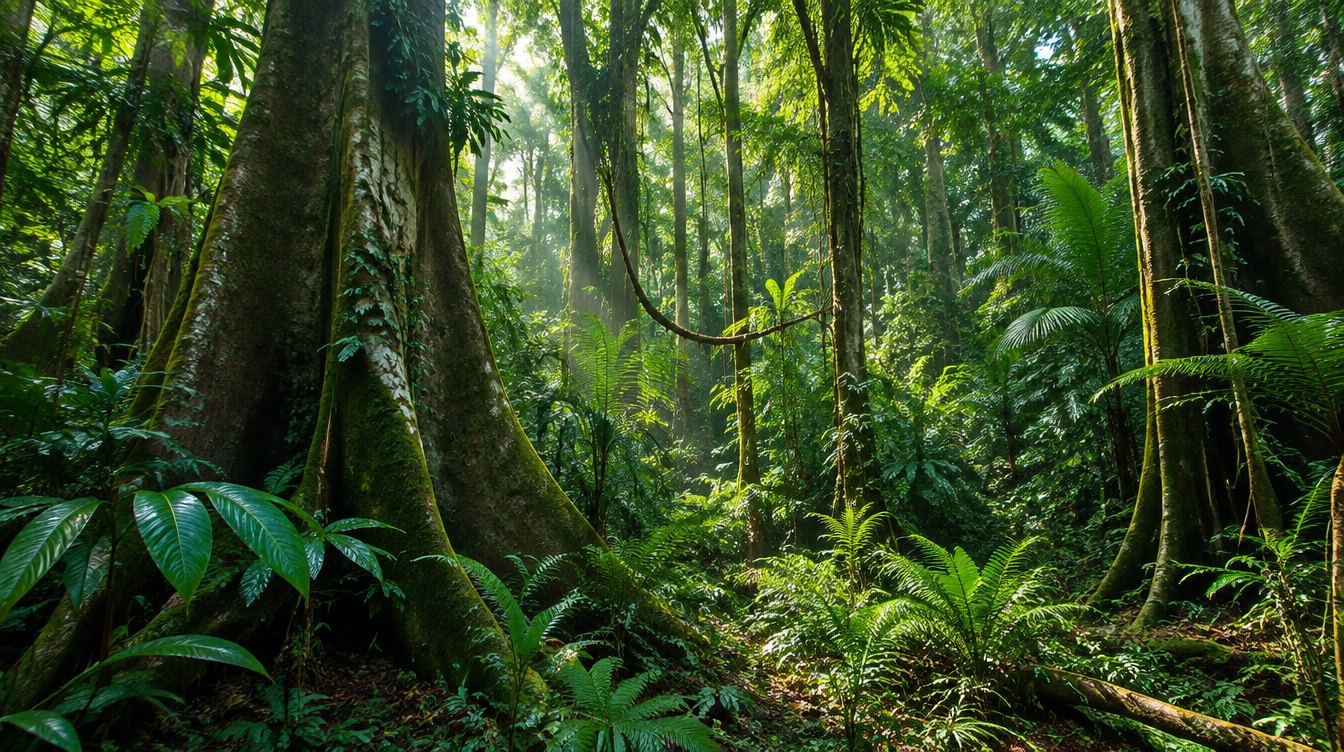
Tropical forests are the most biodiverse ecosystems on Earth and one of its largest carbon reserves. When they are cleared, that carbon returns to the atmosphere and habitats that took thousands of years to form disappear in a few weeks. It is a loss that no recipe can compensate for afterwards.

Our choice

Quality first, and a lighter footprint as a consequence

Working without palm oil costs more and demands more research. We accept that cost because it is the only way to keep the ingredient list short, the nut content high and the supply chain something we can actually explain.

Quality you can taste

Palm oil is often used to lower costs and stabilise texture. Removing it means the creaminess has to come from the raw material itself: more nuts, better nuts, and a formulation built around them.

Origin and traceability

We evaluate suppliers on where a raw material comes from and how it is grown, not only on price and technical performance. A short, documented chain is what makes a claim like this verifiable.

A green choice, not a slogan

Substituting one oil with another is not automatically better: alternatives yield less per hectare and can simply move the problem. That is why we work on reducing added fats overall, not on swapping labels.

Tropical rainforest interior
What it changes in the jar

Producing today with tomorrow in mind

Sustainability is not an accessory to the product: it is a criterion that runs through every stage, from supplier selection to research and development, from production to packaging.

  • No palm oil and no hydrogenated fats in our palm-oil-free range.
  • A higher share of Sicilian nuts, which is what gives the cream its structure and aroma.
  • Short ingredient lists: what is not needed simply is not there.
  • Suppliers assessed also on origin, traceability and use of resources.
Our position

In our own words

Choosing to develop creams without palm oil means turning a formulation choice into a broader commitment to the future of our planet.

Every product we make is born from a series of decisions: which raw materials to use, where they come from, how they are processed and what impact they may have throughout their life cycle. That is why giving up palm oil in our creams is, for our company, an opportunity to rethink the product from a more responsible perspective, one that pays closer attention to the environment.

The production of certain agricultural raw materials can be associated with deforestation, loss of biodiversity and the consumption of natural resources.

For us, therefore, a palm-oil-free cream is not simply a product without a certain ingredient. It is the result of a research journey aimed at finding the right balance between quality, taste, functionality and sustainability.

The goal is to develop formulations that keep the creaminess, the pleasure and the characteristics consumers expect, using raw materials selected with greater attention to origin, traceability and environmental impact. This choice is part of a wider company vision: producing today with tomorrow in mind.

We believe that sustainability should not be treated as an accessory to the product, but as a principle that accompanies every stage of the production process. From supplier selection to research and development, from production to packaging, every step can become an opportunity to reduce waste, use resources more efficiently and progressively improve our impact on the environment.

Our policy does not stop at replacing palm oil. We want to promote a company culture in which innovation and environmental responsibility move forward together. This means evaluating alternatives not only for their technological performance, but also in terms of origin, traceability, use of resources and overall impact.

We are aware that no single ingredient can, on its own, solve the great environmental challenges of our time. Yet we believe that change is born from the sum of many concrete choices. A recipe, a raw material, a production process can become part of a bigger journey.

This is why we choose to develop palm-oil-free creams as the expression of a commitment: to innovate responsibly, to value the planet’s resources and to build products that look to the future.

Because safeguarding the planet does not only mean thinking of the generations to come. It means taking responsibility, today, for the choices that will shape their tomorrow.
The regulatory context
The European Union has adopted a regulation on deforestation-free products (EUDR) covering, among others, oil palm: companies placing these goods on the EU market will have to prove that they do not come from land deforested after 2020. The main obligations apply from 30 December 2026 for large and medium operators and from 30 June 2027 for micro and small enterprises. For us it is a confirmation of a direction we had already taken.

Taste the difference of a palm-oil-free cream

Sicilian nuts, short recipes, no palm oil. Discover the products that carry the palm oil free mark.

Sources: Our World in Data – Palm Oil · IUCN – Palm oil and biodiversity · European Commission - Regulation (EU) 2023/1115. Figures refer to the most recent data available at the time of publication.